
Project: Witchwoven
- Genre: 3D Platform Adventure
- Type: Blockout
- Engine: Unreal Engine 5
- Iterations # 6
- Playtests # 6
- Role: Level Designer
Goal

Inspired by platformers like Mario 64 and Astro Bot, I designed a 3D platformer/puzzle level that grounds classic genre mechanics in Brazilian cultural heritage, using environmental storytelling to make each challenge feel contextually grounded.
- Deliver a platforming/puzzle experience where every mechanic serves a narrative purpose.
- Communicate cultural identity through level geometry, props, and pacing, not cutscenes.
- Validate design decisions through structured playtesting across 6 iterations.
Over 8 weeks and 6 documented iterations under mentorship from Game Design Skills, this project became my core learning ground for level blockout, teaching me how spatial decisions directly shape player behavior and how iterative playtesting turns assumptions into evidence.
Progress
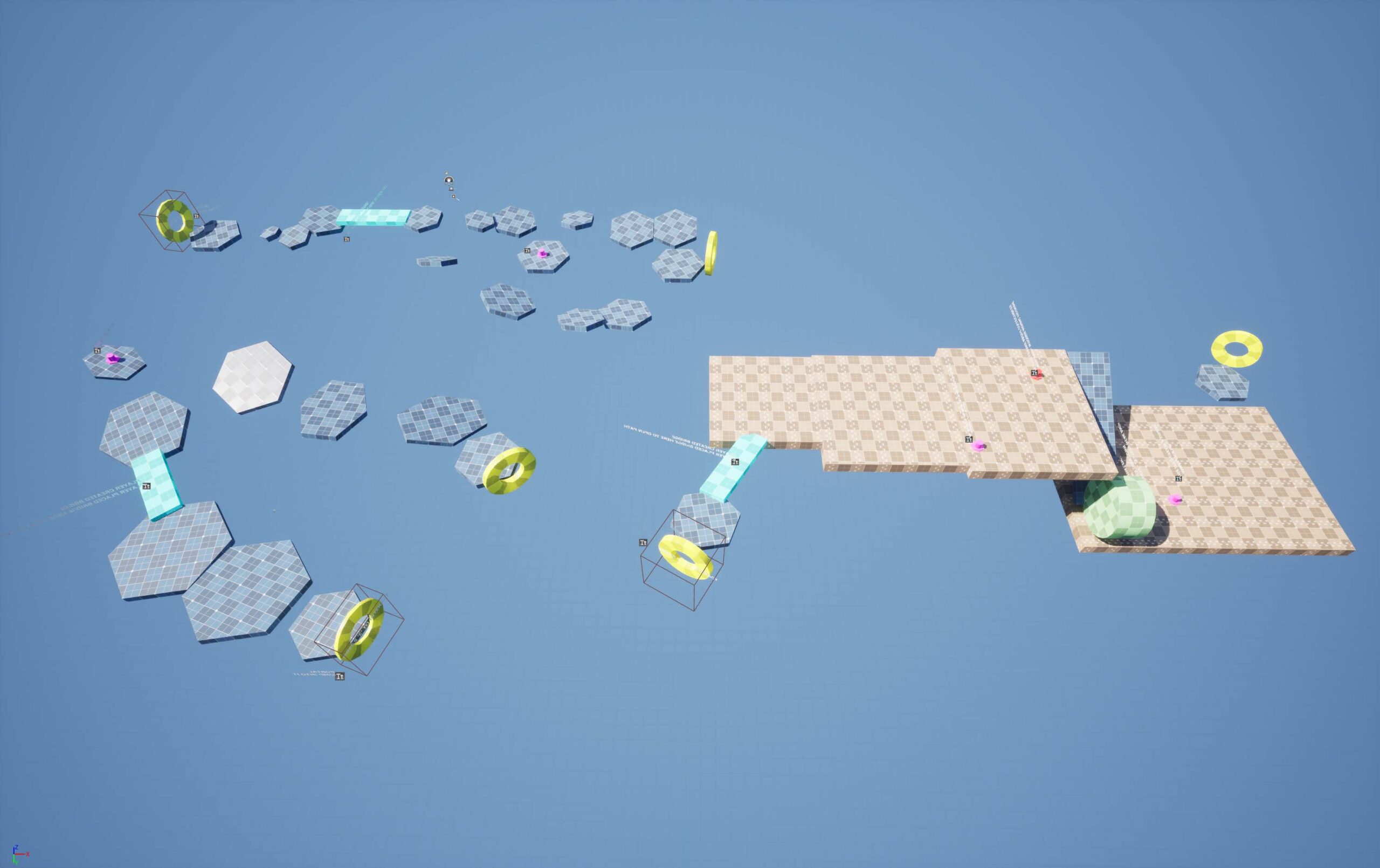
2D Layout


Level
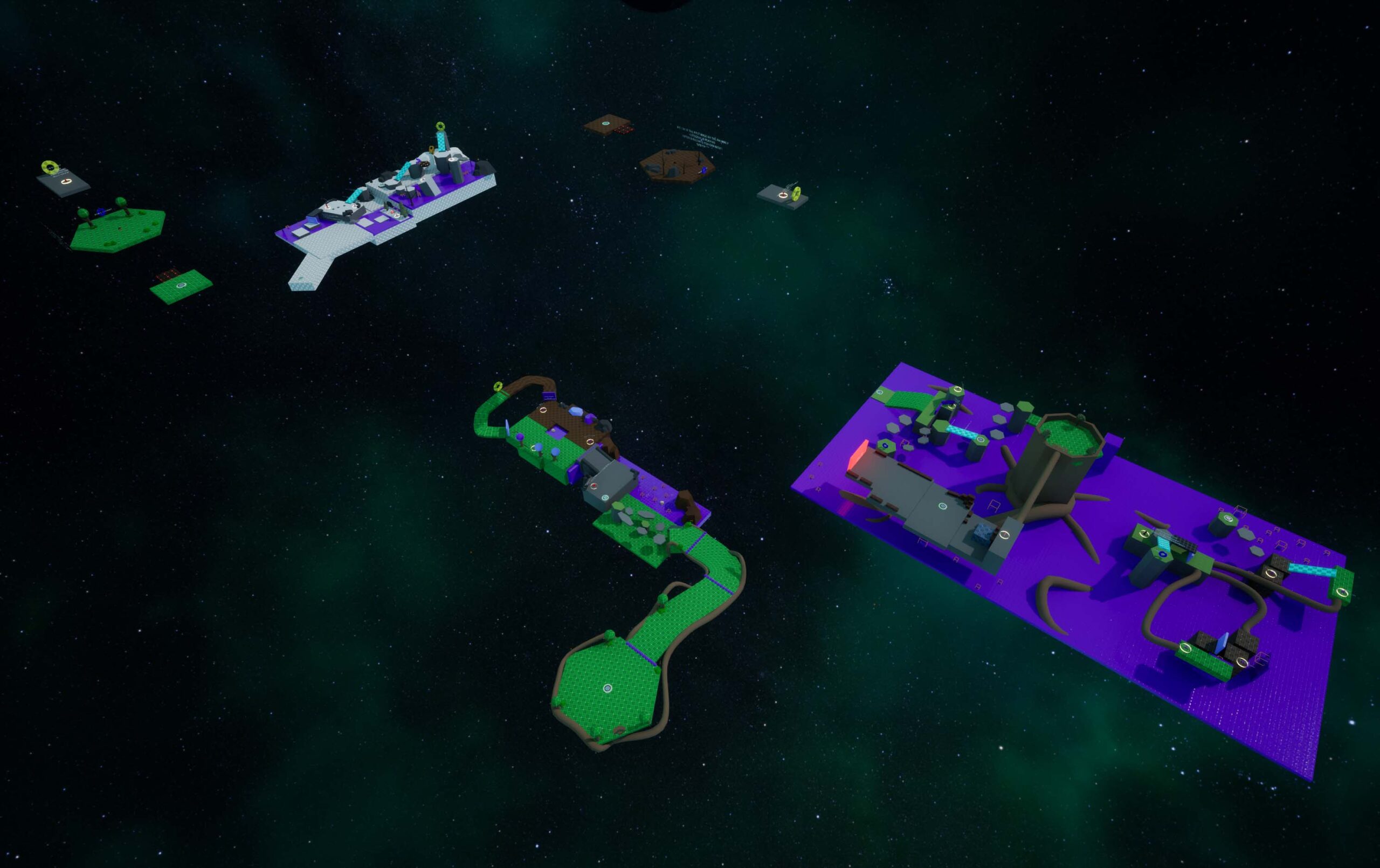
Overview
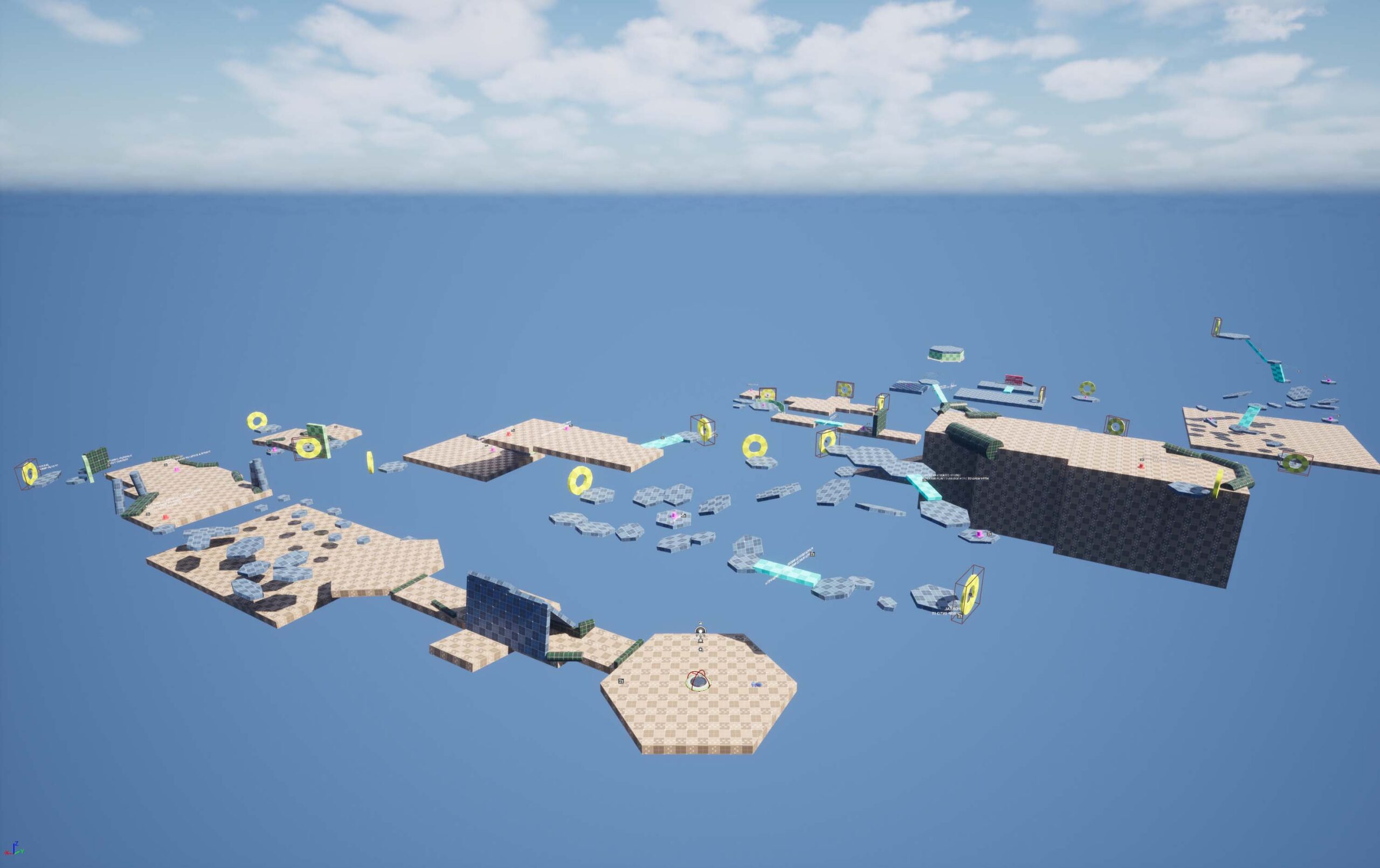
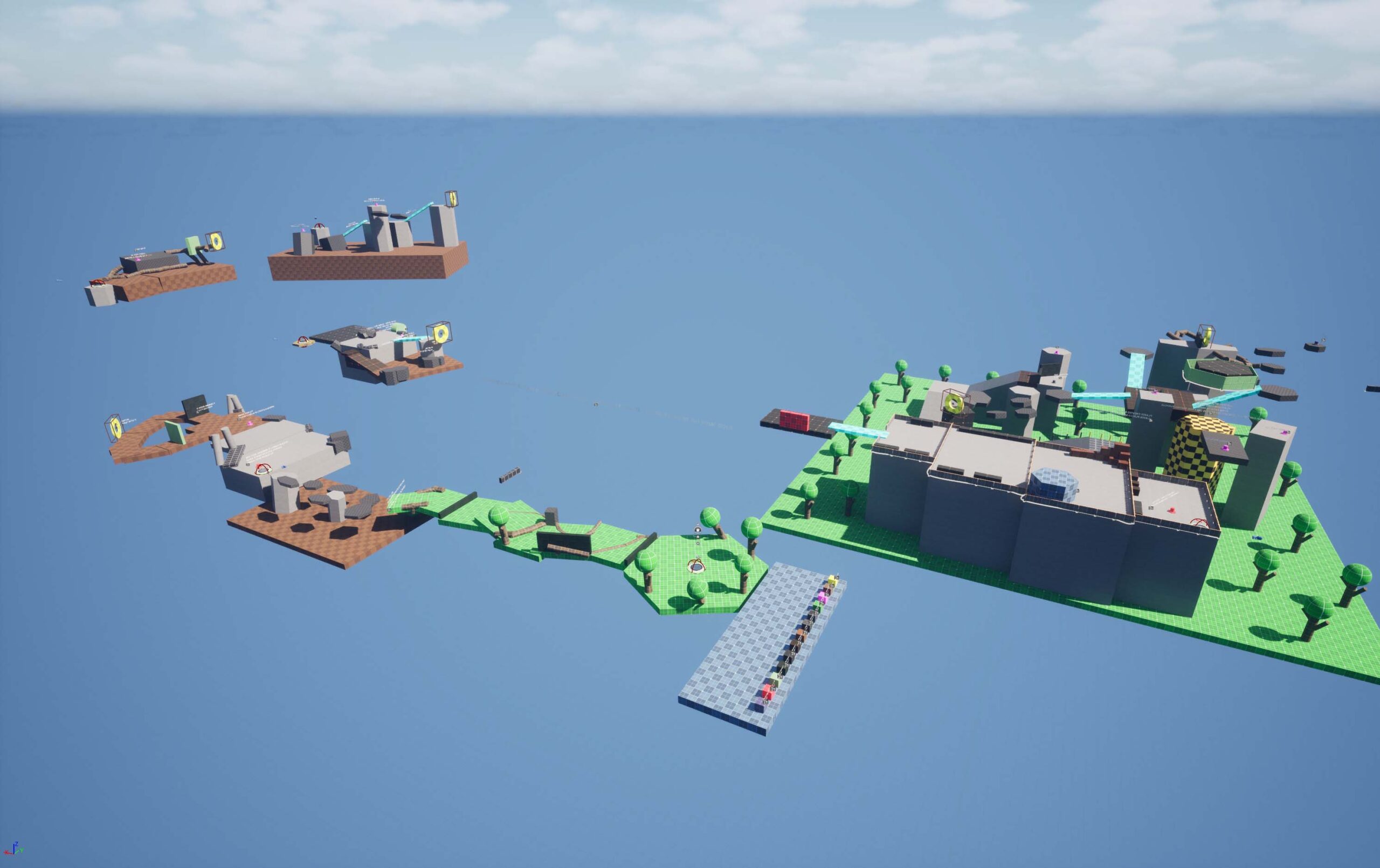
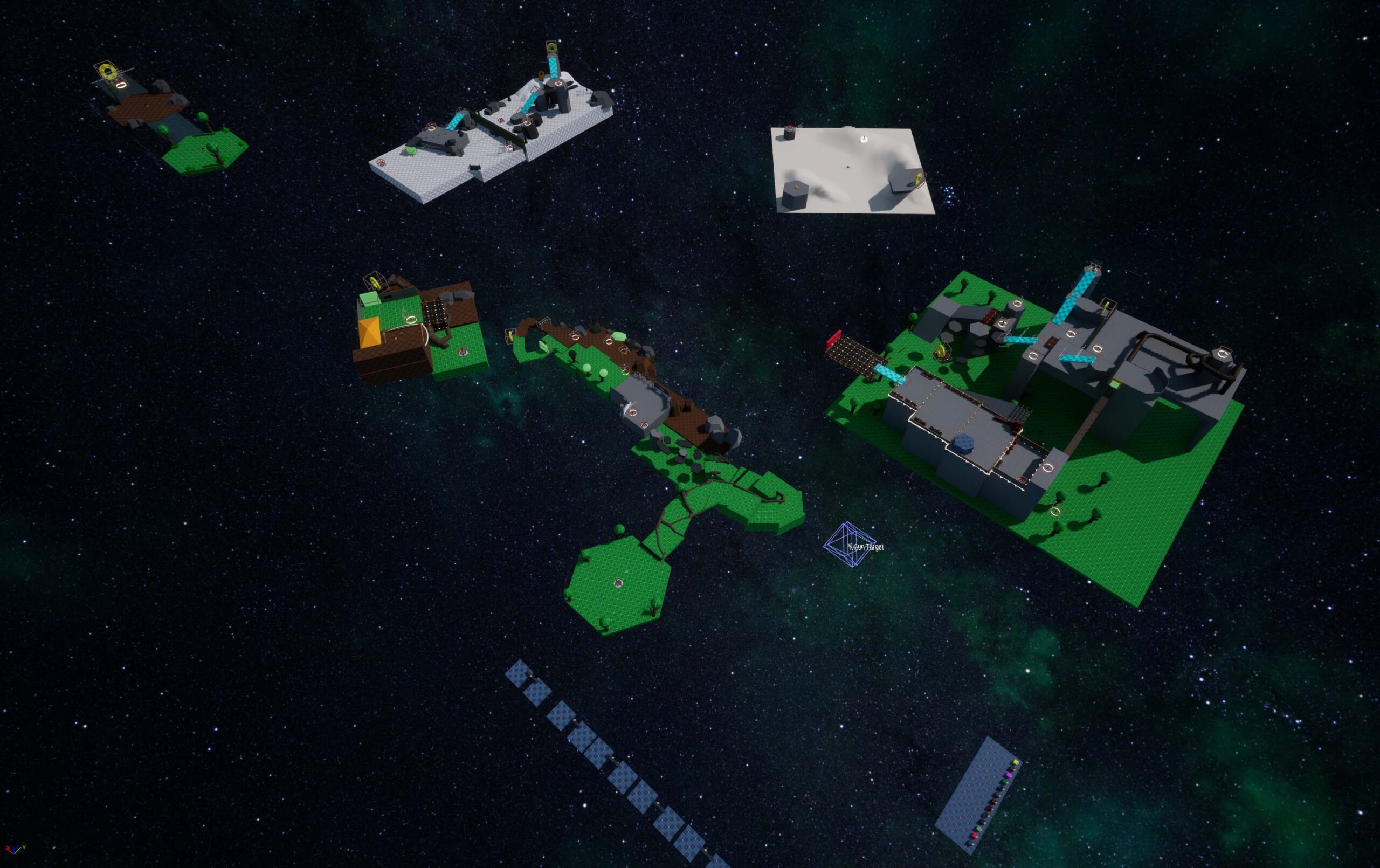
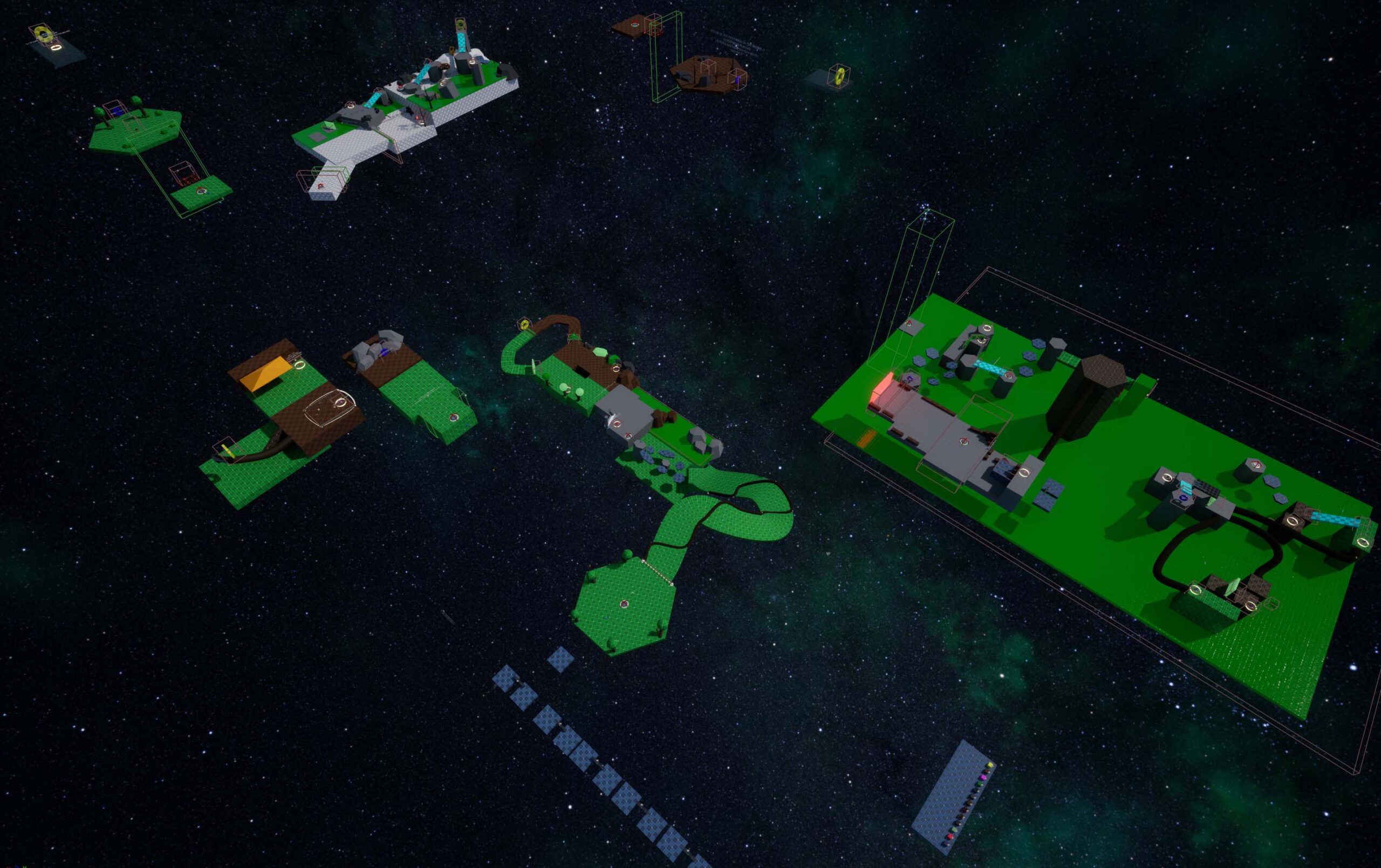
The Bridge Puzzle
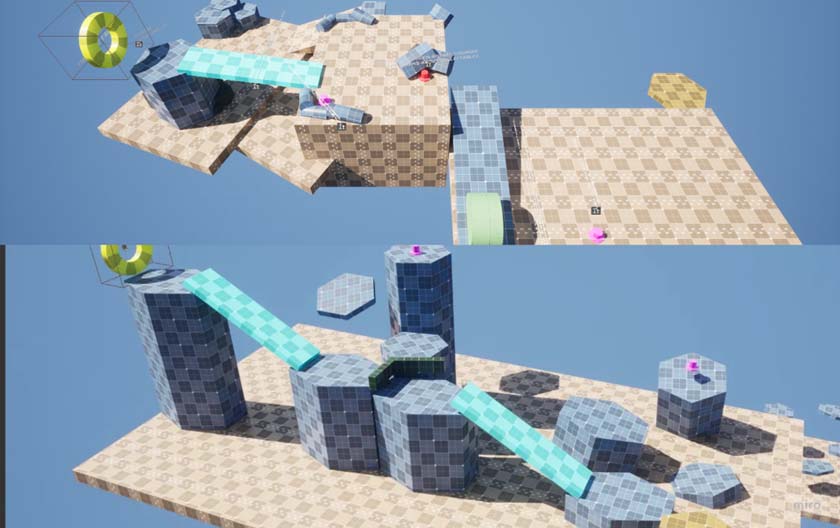
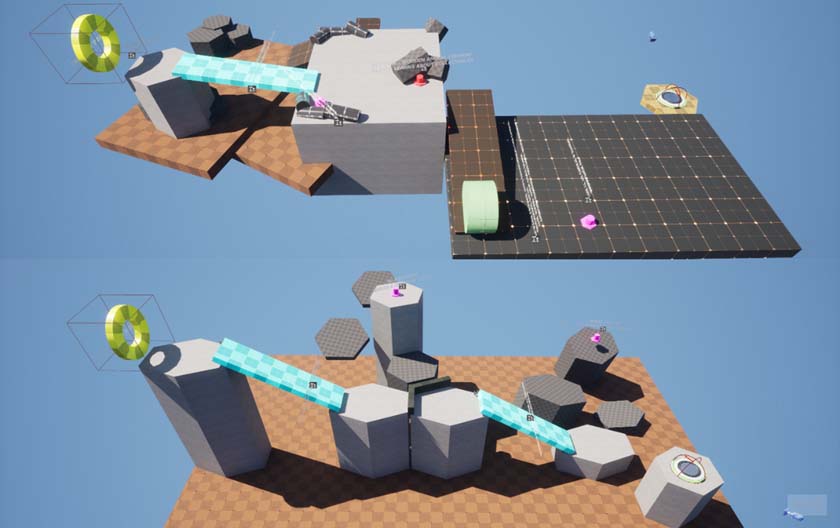
Snow Zone
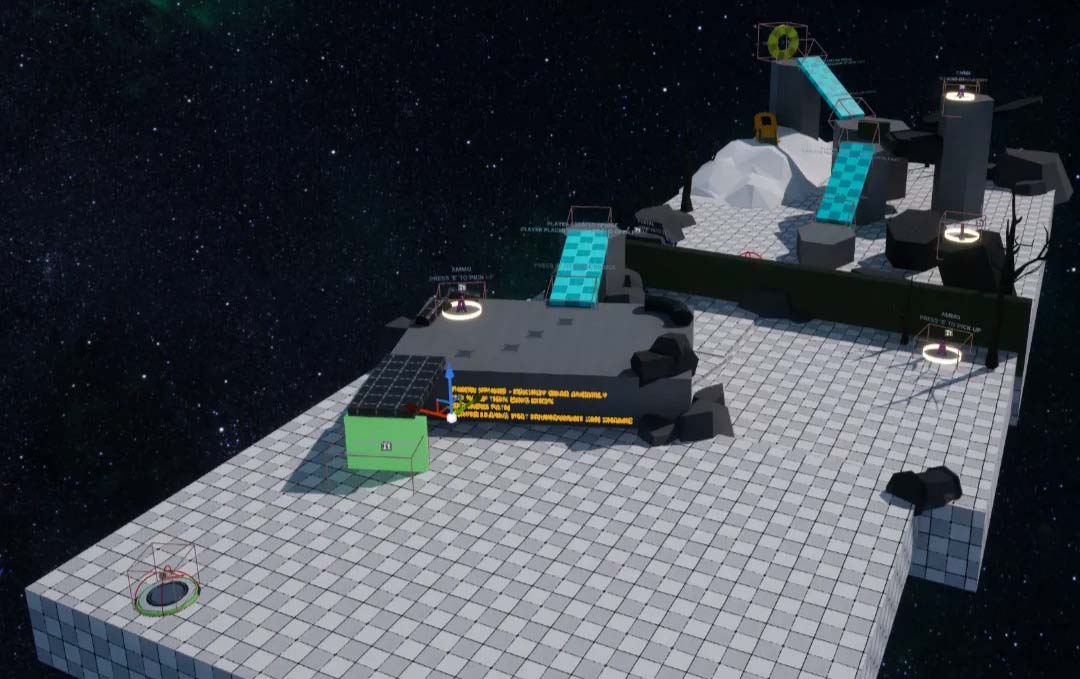
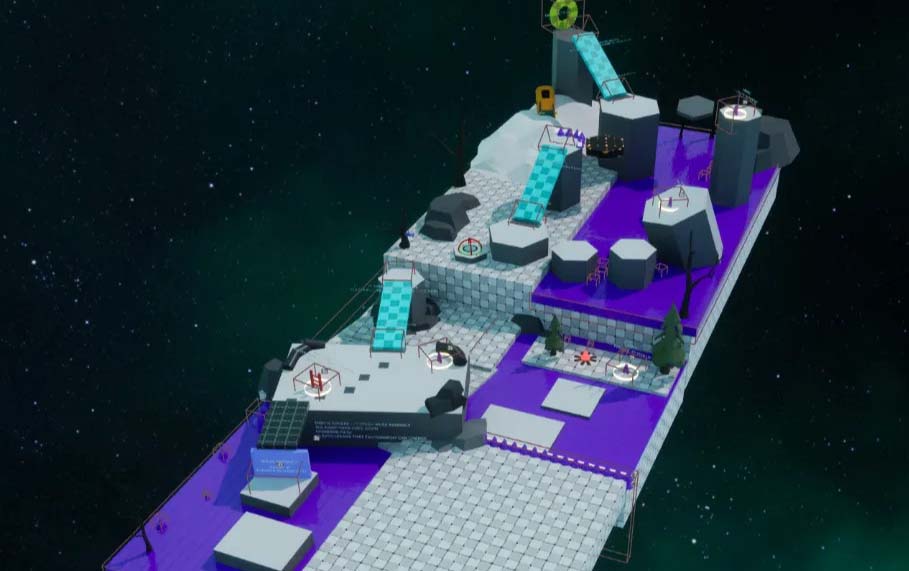
The Roof
Final Puzzle
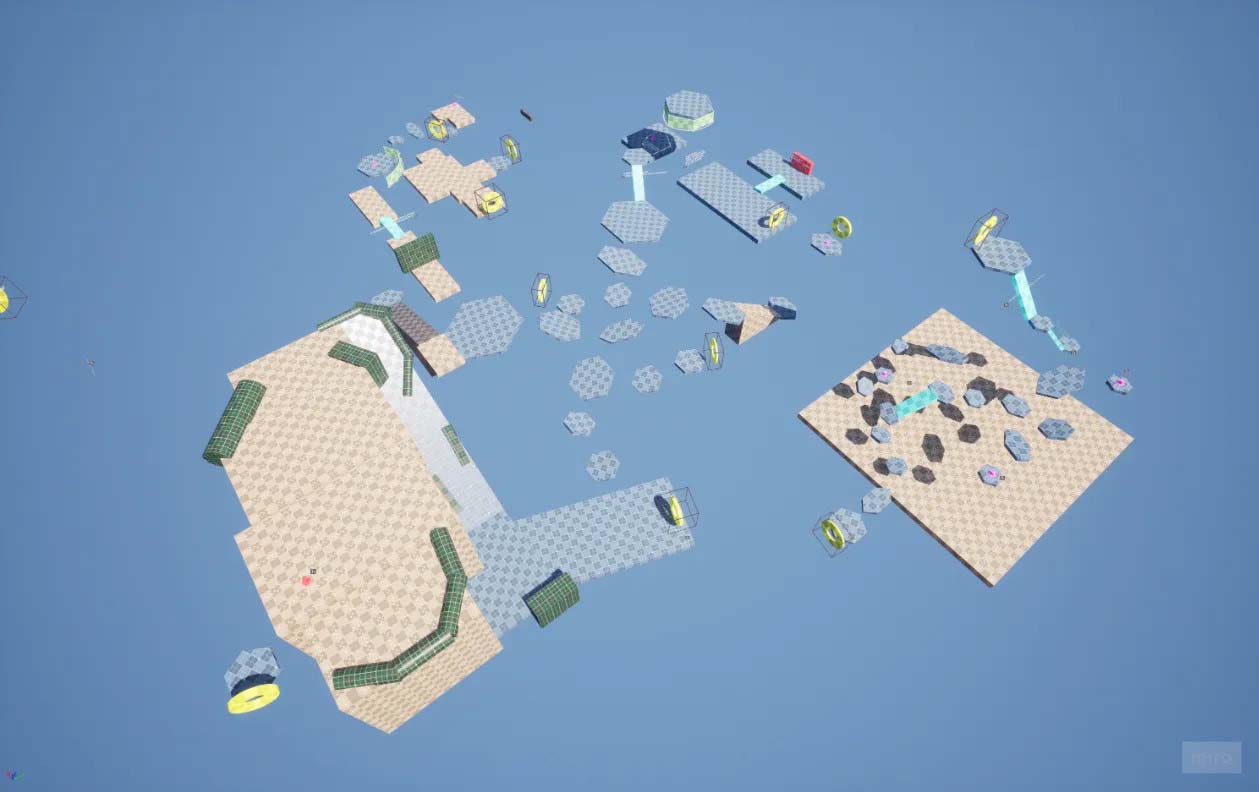
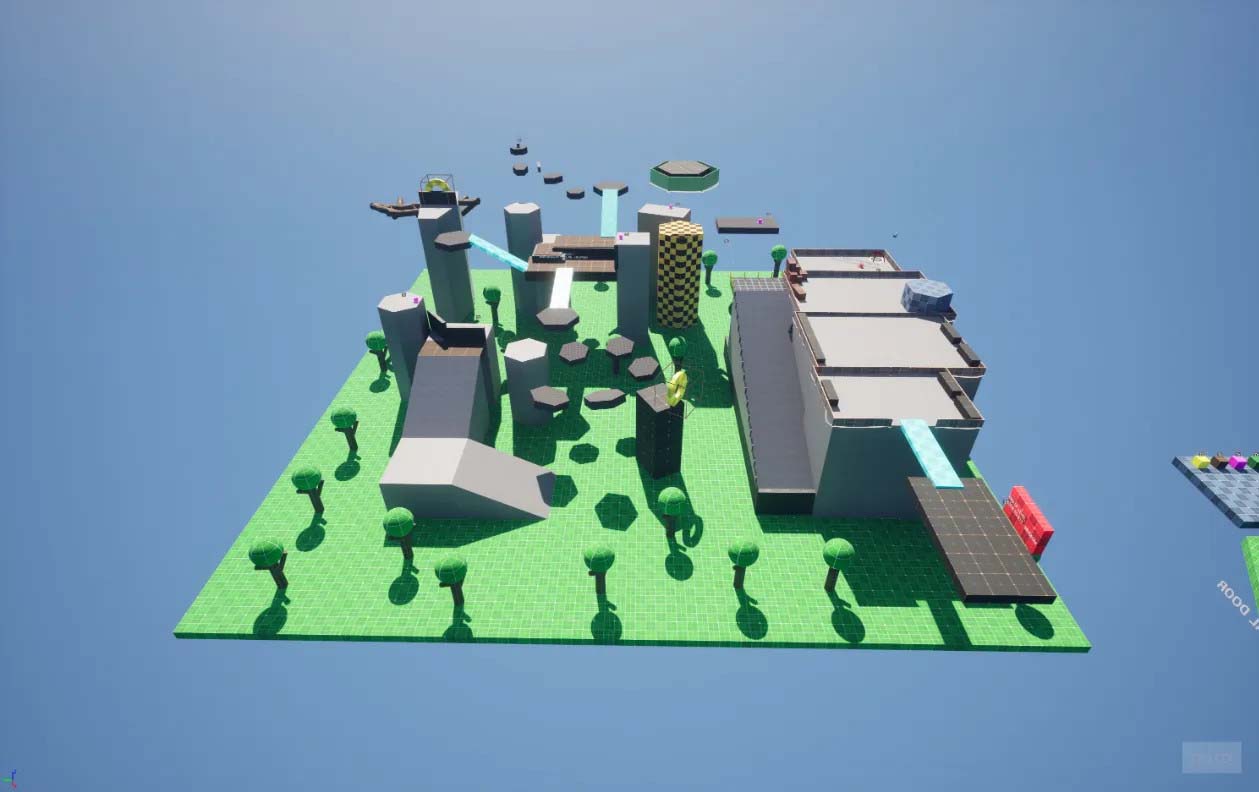
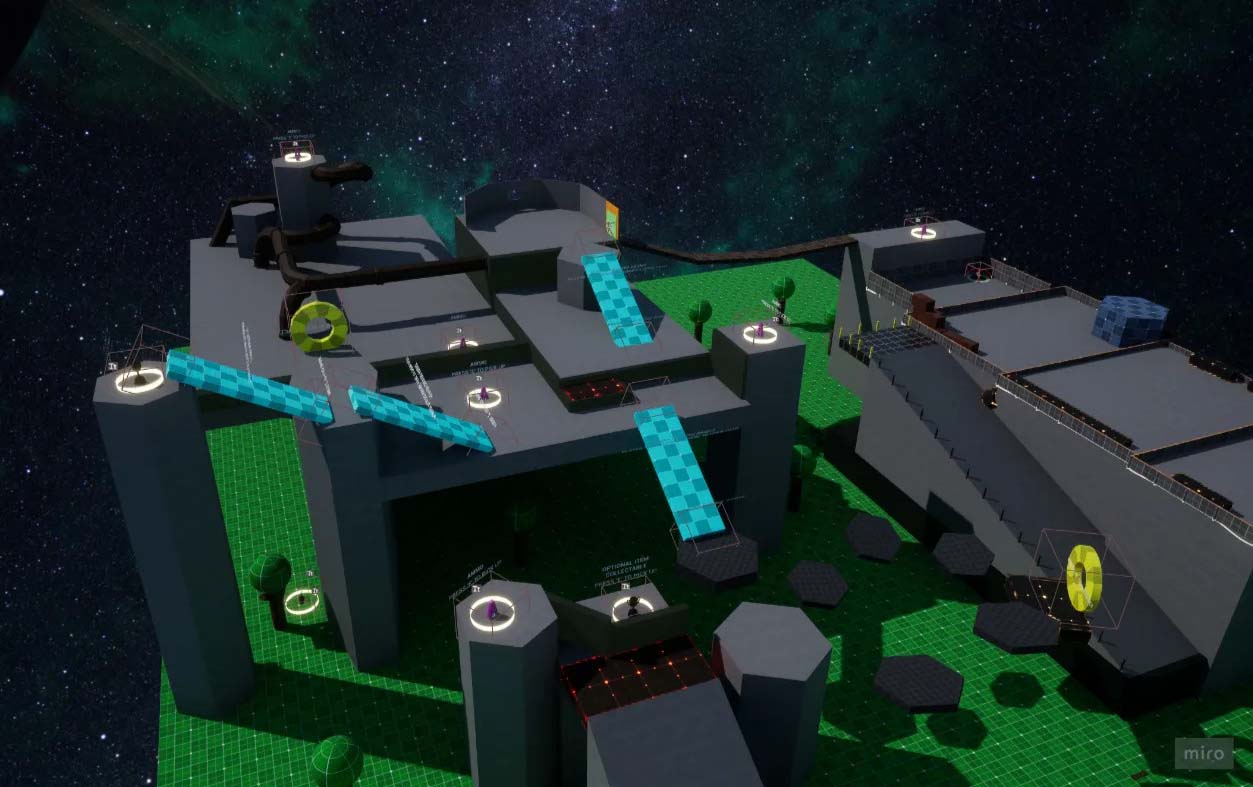
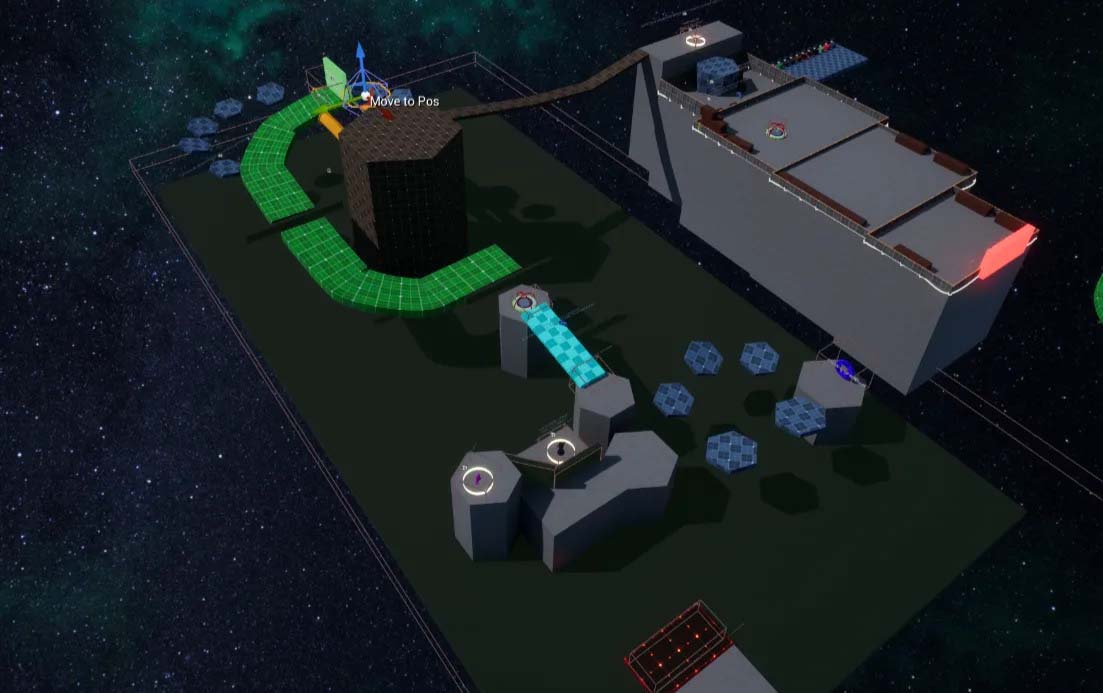
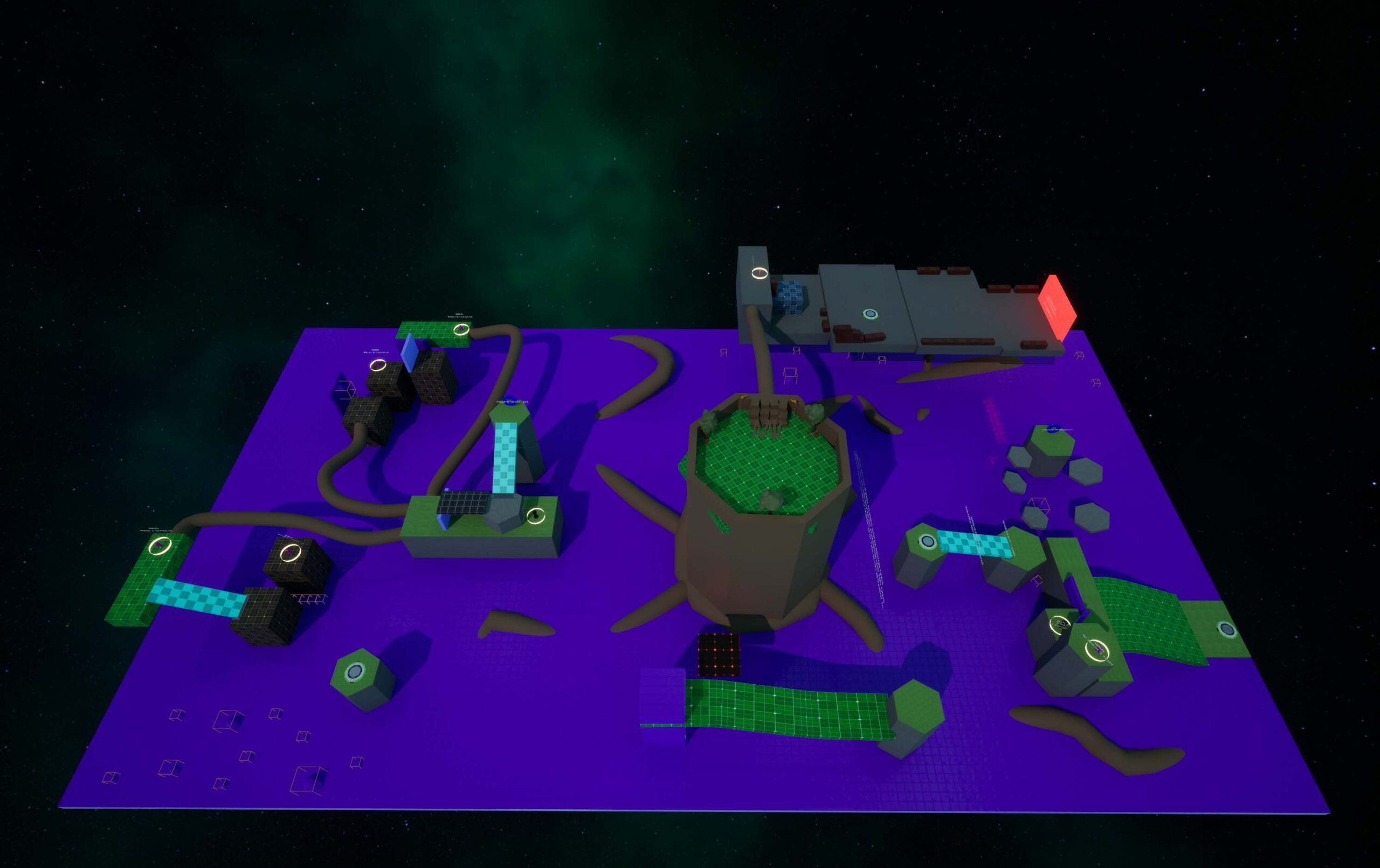
Overview

Setting: The player is trapped in the Void by an anomaly and must find a way forward. The environment visually builds itself around the player as they progress, revealing the ongoing conflict between the anomaly and nature beat by beat, across 11 designed beats.
Constraint: This level was built under an 8-week deadline, emphasizing structured decision-making within production constraints.
Design Pillars:
- Tutorial Level: Introduces core mechanics naturally through gameplay, without breaking immersion.
- Player Creativity: Encourages experimentation and personal solutions within guided challenges.
- Lore Integration: Uses environmental storytelling to build emotional connection and world understanding.
- Clear Visual Language: Assets communicate danger, goals, and interaction clearly to support intuitive navigation.
Highlights
Narrative Elements


The environment contrasts vibrant greens representing life and nature against desaturated browns marking the anomaly’s corruption, as a visual metaphor for the level’s core conflict.
- Purple elements appear on both sides of this contrast, representing the anomaly actively attacking nature or leaving its mark on already corrupted areas, letting players read the world’s story through color alone.
Puzzle: Bridge & Hazards


This beat is the first real test of the bridge-building mechanic, applied under pressure after being introduced in a safe environment.
- The player must use bridge-building to cross the hazard zone and reach the Yellow Portal, validating whether they internalized the tutorial while maintaining tension throughout the sequence.
Reactive World Events


In the final stretch of the level, both the anomaly and nature respond dynamically to the player’s progression. The anomaly spawns obstacles to block their path, while nature creates new routes to help them forward.
- This dual system recontextualizes both forces from background narrative elements into active participants, reinforcing the anomaly vs. nature conflict at the moment when player tension should be at its peak.
Techniques
Vantage Point
An elevated platform reveals the entire final puzzle at once, giving players a complete visual overview before engaging.
Navigation: Players enter the puzzle with a mental map already formed, reducing trial-and-error.
Objectives: Portals, ammo, and goals are visible from above, giving players clear purpose before engaging.
Clarity: The full puzzle layout is readable in a single glance, supporting better decision-making.
Affordance
Jump distances were documented and classified by difficulty, keeping platforming intuitive within a chaotic environment.
Affordance: Gameplay clarity takes priority over visual chaos, ensuring players understand what is possible.
Consistency: Classified jump distances create hidden rules that reduce frustration and preserve flow.
Balance feel and function: The environment feels unpredictable, but operates on clear, logical rules.
Safety Net
Replacing fatal drops with a recoverable floor lets players fail forward, returning to the puzzle immediately without restarting and losing progress.
Reduces Frustration: Eliminates restart loops, keeping players focused on solving.
Supports Learning: Players can attempt mechanics repeatedly without penalty.
Builds Confidence: Skills are reinforced gradually before difficulty increases.
Progressive Reveal
Showing the full level at once created visual overload and broke narrative flow, so each section is revealed only as the player reaches it.
Reduces visual overload: Players focus on immediate goals without upcoming distractions.
Enhances immersion: The world builds itself around the player, reinforcing a shifting, unstable reality.
Supports narrative clarity: Each reveal acts as a natural beat marker, guiding progression organically.
Walkthrough
Beat 1: Openning Scene
The initial cutscene introduces the player to the world, showing them being swallowed by the anomaly, thrown into the void, saved by the necklace, and placed on the game’s starting platform.
Gameplay Type: Narrative
Beat 2: Basic Movement
The game’s starting platform introduces basic movement mechanics through a sequence of small jumps the player must complete.
Gameplay Type: Tutorial / Light Narrative
Beat 3: Weaving Power
A cutscene would show the player acquiring the Headdress and introduces the Straw Weaving mechanic, marking the first power unlock.
Gameplay Type: Light Narrative / Straw Weaving Power Introduction
Beat 4: Weaving Power
The player learns to use the basic Straw Weaving mechanic by collecting ammunition and crafting items. Strong and Weak anomalies are introduced, with players able to destroy Weak anomalies using crafted spheres. Environmental storytelling begins to show the conflict between anomaly and nature, setting the tone for the world. The section concludes with the discovery of a portal leading to the next area.
Gameplay Type: Weaving Mechanic & Portal Tutorial
Beat 5: Lore
The player interacts with a cutscene depicting a moment from a happier past, then learns to use the blue portal mechanic. The section ends with the player’s first interaction with a painted ceramic, introducing the Codex system for lore discovery.
Gameplay Type: Tutorial Lore / Tutorial Blue Portal
Beat 6: Bridge Power
The player reaches a new junkyard area covered in snow and must complete a challenge to unlock the bridge-building ability, allowing them to connect distant points in the environment.
Gameplay Type: Bridge Tutorial
Beat 7: Hazards
The player must solve a puzzle while navigating newly introduced environmental hazards, learning to balance movement, timing, and observation under threat.
Gameplay Type: Hazard Tutorial
Beat 8: Lore 02
The player interacts with a cutscene revealing a moment from a sad past, followed by a refresher on the blue portal mechanic. The section concludes with the first interaction with a Wooden Animal Figurine, introducing the Collectables system.
Gameplay Type: Narrative / Tutorial Collectable
Beat 9: Roof Seq.
The player reaches the museum door but discovers it is locked. A cutscene reveals the key spawning behind them, and when attempting to retrieve it, a water box activates, trapping the player and transporting them to the final puzzle.
Gameplay Type: Traversal / Narrative
Beat 10: Final Puzzle
The player must combine everything learned about the Weaving mechanic to solve the final puzzle of the level, ultimately reaching the museum key needed to unlock the door and complete the stage.
Gameplay Type: Traversal & Puzzle Challenge
Research & Documentation
Research, ideation and planning
As part of the pre-production phase, all research and conceptual materials were organized in a dedicated Miroboard, covering:
The initial concept for the game, beyond just the level.
A comparative analysis of three reference games.
Visual research of real-world objects.
Reference gathering from other media forms (film and animation).
The research, ideation, and synthesis conducted directly informed the structure of the level’s narrative, pacing, and core gameplay systems.
Level Design Document
This LDD was created in two phases: one during pre-production and one revised after the final blockout. Adapted from Jordan Mcmorris’s template (with permission), it covers narrative, mechanics, pacing, and layout in full detail.
Note that this document reflects the design intent at each phase and may not match every detail of the final blockout.
Iterative Development
Example 01: Snow Zone (Beat 06 & 07)
Final State
The Snow Zone is a snowy junkyard environment where the player first learns the bridge mechanic and immediately applies it under pressure, with environmental hazards reflecting the anomaly’s impact on the world.
First & Second Iteration
Beat 6 and Beat 7 were initially structured to reinforce platforming skills and introduce the bridge mechanic. Playtesting revealed 3 issues:
Fatal drops with no recovery option
Task repetition without difficulty progression
Jump metrics requiring recalibration
Solution:
Jump distances and heights were recalibrated to match updated metrics
Repeated tasks were replaced with escalating challenges
Safety nets were added to let players recover without restarting
Results:
Bridge mechanic flows naturally into later beats
Difficulty curve aligns with the updated jump metrics


Third & Fourth Iteration
Playtesting indicated the main path was too narrow and rigid. Beats 7 and 8 were merged into a single larger space, but this revealed new issues:
Merged space became too large and empty
Players overlooked the item that grants bridge building, falling back on earlier mechanics.
Safety nets covered the entire zone, removing all risk
Solution:
Added anomaly hazards to fill empty space, removing safety nets in select areas.
Repositioned the bridge key item to make it clearly visible and distinct from ammo
Tightened space between gameplay moments to improve flow
Results:
Bridge ability item was correctly identified, leading to intended mechanic engagement.
Hazard zones created meaningful risk without relying entirely on safety nets
Zone reads as a single cohesive space rather than two disconnected areas


Summary
The Snow Zone evolved from a rigid two-beat tutorial into a single cohesive space where the player learns the bridge mechanic and immediately applies it under escalating pressure, with recalibrated jump metrics and anomaly hazards introducing selective risk alongside safety nets.
Example 02: The Decision to Cut
The Outcome
No players or instructors, despite having followed the level’s development for eight weeks, noticed that the Dig Site had been removed. This confirmed the zone was not essential to the experience.
After seven unsuccessful iterations, cutting the Dig Site turned out to be the most elegant and effective solution. What was lost in repetition was gained in pacing and clarity.
Sometimes, the best design choice is knowing when to let go. Here is why.
Original Intent:
The Dig Site’s sole purpose was to reinforce the sphere mechanic used to destroy weak anomalies, repeating what the previous zone already taught without introducing anything new.
Observed Issues:
Zone repeated the previous beat’s mechanic without escalation or new content
Failed to reinforce the core visual rule: dark purple means indestructible, light purple means destructible
Iteration 2&3:
A Lore spot and tree root traversal were added, redesigning the zone as an archaeological dig site connected to painted ceramics delivering narrative context.
Problem:
Players reached the yellow portal by accident, wandering without understanding the zone’s objective
The Lore spot’s purpose was not communicated clearly enough to change player behavior
Conceptual improvements did not translate into clearer player direction


Multiple Iterations Later:
Over 4 additional iterations, I tried:
Reinforcing the weak/strong anomaly mechanic in different ways
Redesigning the layout
Teaching the blue portal mechanic
None of these versions felt like they added meaningful value.


Comparative Analysis:
| Dig Site | Narrative Zone |
|---|---|
| Reinforces strong/weak anomaly mechanics | Introduces moving platforms |
| Introduces blue portal (intra-zone teleportation) | Reinforces blue portal |
| Introduces root traversal | Delivers narrative through cutscene |
| Introduces Codex for narrative | Introduces Collectibles and Inspection mechanic |
Rationale for removal:
The Codex system was moved to the Narrative Zone (after the cutscene), ensuring narrative continuity without requiring a dedicated zone. Everything the Dig Site attempted to teach was already covered more effectively elsewhere in the level.
Obsolete Teaching Moments:
Strong/Weak Anomaly Differentiation: Already reinforced through the color-coded system in B2 through B4, making repetition in the Dig Site unnecessary.
Root Navigation: Introduced naturally in B1 and B2, repeating it in the Dig Site added no new value to the player experience.
Blue Portal Tutorial: More effectively handled in later beats through improved platform layout and clear visual signaling.
Summary
After seven iterations, cutting the Dig Site was the clearest design decision of the project. Every mechanic it attempted to teach was already covered more effectively elsewhere, and its removal tightened the level’s pacing without losing a single essential gameplay moment.
Example 03: End of Level Sequence (Beat 09/10/11)
Final State
Designed as the culmination of the level, the final zone highlights the environmental battle between anomaly and nature, while challenging players with advanced variations of previously learned mechanics.

Initial Design Goal
The end zone was originally designed around two separate puzzles, guiding the player through a sequence of actions:
Spot the final door as the objective
Locate both ammo pickups across the two puzzles
Use the combined ammo to create the path to the final door
Note that ammo was also required to progress through the puzzles themselves.
First & Second Iteration:
The end zone was initially structured around two separate puzzles the player could solve in any order, with both ammo pickups and the final door spread across a single flat space.
Excessive backtracking due to spread out layout
Poor visual signaling made navigation unclear
Final objective not visible at a glance
Two separate puzzles created unnecessary complexity
Second puzzle section was repetitive
Solution:
Merged two puzzles into a single linear sequence
Reorganized layout to minimize backtracking
Focused objective on a single ammo pickup leading to the museum door
Results:
Linear flow reduced decision overload
Layout reorganization made the final objective easier to locate


Third Iteration
Playtesting revealed structural and visibility issues that risked breaking player progression:
Falling after bridge placement caused soft-locks, leaving players with no ammo to recover.
No safety nets, unlike previous sections
Elements placed at similar height made navigation direction unclear
Solution:
Added safety nets to prevent falling back to the start
Restructured the space so elements are clearly distinguishable across different heights
Introduced a wooden footbridge to create a clear visual path toward the final ammo
Results:
Soft-lock risk eliminated
Navigation direction became clear through visual hierarchy
Ground-level space repurposed for narrative or optional elements


Fourth & Fifth Iteration
Playtesting revealed that the space was too large and the objective unclear, leaving players without a clear golden path:
Excess playable space caused navigation confusion
Ammo icon failed to communicate it was the final requirement to open the door.
Yellow portal was misread as the level exit, blocking players from using it correctly.
Solution
Streamlined the area and narrowed the path to create a clearer golden path
Introduced Blue Portal to distinguish puzzle solutions (blue) from level transitions (yellow).
Changed the final objective from ammo collection to finding the Museum Key
Introduced the Ancient Tree as a visual reference to local folklore.
Results
Tree roots open paths as nature actively aids the player against the anomaly.
Anomaly spawns a block, nature creates a platform, making the conflict active and visible.
“Top of the tree” zone creates a sense of accomplishment and a narrative victory lap.
Final zone includes variations of all mechanics introduced throughout the level


Summary
The end zone evolved from a two-puzzle ammo sequence into a single linear journey toward the Museum Key, with the Ancient Tree replacing the museum exterior as the visual centerpiece.
- Player arrives at the roof and approaches the museum door
- Door is locked, player turns to find the key appearing
- Player is guided through the final puzzle to claim the key
- Nature and the anomaly react dynamically throughout, making the conflict visible and active
Post-Mortem
Overview
This level was built under a self-imposed 8-week deadline to simulate real production constraints. Over that period, approximately 15 players tested the level across weekly sessions of 2 to 3 people, with a final playtest conducted through the Funsmith Club community. Feedback was gathered at every stage, directly shaping each iteration.
What Worked
Platforming Feel: At least 3 to 4 players, spontaneously compared the blockout to Mario 64, Astro Bot, and Crash Bandicoot within the first two weeks of playtesting. No prompting was required, indicating that the platforming feel was successfully communicated through geometry and pacing alone.
Tutorial Structure: Players consistently reported that mechanics were introduced gradually and that puzzle difficulty scaled naturally throughout the experience. The level succeeded as a tutorial-focused design.
Environment Readability: Most players correctly identified the general environment type in each zone, such as forest, junkyard, or desert, supported by in-game text and visual language. Environmental themes were readable without additional explanation.
What Didn’t Work
Cultural Communication: The cultural layer was not legible to players outside the local context, which was anticipated given that most testers were based in the US or Europe.
Players read the anomaly vs. nature conflict correctly, but did not connect it to local folklore
Straw bridge was read as a generic ammo resource, not a cultural reference
Ancient Tree was understood as a narrative element, not as inspired by a real local landmark
Painted ceramics did not communicate their connection to ancestral knowledge transmission
Embedding local culture into mechanics requires more explicit visual and narrative support than environmental detail alone.
Player Creativity: The original design intended to allow creative puzzle-solving with multiple valid approaches. This was not achieved due to technical limitations in Unreal Engine 5 Blueprint implementation rather than a flaw in the core design concept. The mechanics worked, but lacked the flexibility needed for player expression.
If I Could Do It Again
Priority 1: Gameplay Flexibility Rebuild the gameplay system to support multiple valid puzzle-solving approaches, as the lack of player creativity was the most significant gap between design intent and the shipped experience.
Priority 2: Spatial Readability Improve elevation variety across all zones, particularly the Snow Zone and final section, which relied too heavily on flat rectangular geometry, making depth perception and navigation harder than intended.
Priority 3: Platforming Timing Revisit moving platform sections where platforms did not pause long enough for players to read and react, particularly in the Snow Zone.
Priority 4: Thematic Consistency The game is titled Witchwoven, but witchcraft folklore was rarely referenced or explored during development. The clearest representation appears in the anomaly itself, but only someone familiar with local culture would recognize it as such. A future version would incorporate the island’s witchcraft traditions more explicitly into mechanics, visual language, and narrative.
Priority 5: Polish
- Replace the ammo icon with a straw symbol to better represent what the player is collecting
- Add a visual indicator when collecting painted ceramics, currently only communicated through audio
- Remove the anomaly wall in the first section of the final puzzle so the collectible is visible earlier